All sizes included

Home delivery
Australia Post
➜ 5 to 7 business days


100 / 100 / 100 cm
70 / 130 / 100 cm)? No worries.Couldn't load pickup availability
Large sizes delivered from Fri 31 Jul
Built for larger openings with reinforced components and a more modular build.
 Extra-long magnets (15 cm vs 4 cm)
 Divisible into multiple panels at any desired interval
 Thicker & more durable mesh
 Gravity steel rods in galvanized steel
 Resistant to extreme weather conditions
 Compatible with wood, aluminium, PVC, plaster & more
 Velcro width: 4 cm at the top, 2 cm on the sides

 How to measure properly? (Method A or B)
A: Measuring the opening frame?
➜ Add +4 cm to the width and +2 cm to the height (the Velcro strips are 2 cm wide on the sides and 4 cm at the top).
B: Measuring the final application frame (outside / inside)?
➜ Don’t add anything, measure right down to the floor.

Worried it might be too long?
➜ You can slightly fold the bottom of the fly screen without affecting its use.

Tip: round your measurements up to the nearest centimetre
➜ Better a bit bigger than too small 😉
 Installation video below:
Carefully clean the frame of your door with a damp cloth, then let it dry for 1 minute.
Unroll the double-sided tape, measure it, then cut it into 3 pieces (2 equal heights and 1 width).
Remove the adhesive backing from each strip, then apply them around the edge of your frame (except at the bottom).
Press firmly on each Velcro strip to ensure maximum hold. If needed, add extra tape or small nails depending on your frame type.
Attach and align the magnetic fly screen, Velcro to Velcro. Check positioning and adjust if necessary. Enjoy your screen and a bug-free summer!
🔹 Note: The magnets are already integrated and discreetly hidden in the centre strip of the fly screen.
No worries. Select the Custom Size option that fits, then enter your exact dimensions (e.g.: 244 × 182 cm, width × height).
24/48h (and up to 14 days maximum for custom-made sizes).
Australia Post

DHL
Any product (excluding custom-made) can be returned for any reason within 30 days after delivery.
✅ Free returns at our expense.
Back to the original payment method within 2 to 5 days.

Magnetic fly screen

Self-adhesive velcro tape

Installation manual


How to
Measure?

How to
Install?

Discover
Moskera
✓ Quick installation
✓ Perfect for renters
✓ Strong magnets
✓ Durable mesh
✓ Custom made
✓ Fits all doors
✓ Free returns
✓ Customisation available
✓ Quick installation
✓ Perfect for renters
✓ Strong magnets
✓ Durable mesh
✓ Custom made
✓ Fits all doors
✓ Free returns
✓ Customisation available
✓ Quick installation
✓ Perfect for renters
✓ Strong magnets
✓ Durable mesh
✓ Custom made
✓ Fits all doors
✓ Free returns
✓ Customisation available
✓ Quick installation
✓ Perfect for renters
✓ Strong magnets
✓ Durable mesh
✓ Custom made
✓ Fits all doors
✓ Free returns
✓ Customisation available


The Moskera® fly screen door is built to last. With ultra strong mesh, heavy duty magnets and optimal wind resistance, it provides long lasting protection season after season.

Around twenty powerful 15 cm magnets built into the entire central column, discreetly hidden under our patented closing system for unmatched wind resistance.
Customer reviews
Customer reviews
Customer reviews
Customer reviews
Customer reviews
Customer reviews
Customer reviews
Customer reviews
Customer reviews
Customer reviews
Customer reviews
Customer reviews
Customer reviews
Customer reviews
Customer reviews
Customer reviews
We’re really happy with the finished product, it came well packed in a box that we’ll be able to reuse for storage off-season. Easy to install, and a lot less noticeable than we expected.
Both the dog and the cat go through without any issues, and the screen closes back up perfectly. Highly recommend!
Quality product, very easy to set up 👍
I ordered a custom large-size fly screen (410×208) on Moskill’s website after many quotes from tradespeople telling me it would be impossible or ridiculously expensive. In the end, this screen is better than perfect and super easy to install. The system works wonderfully. I recommend it 200%. Congratulations to the designers.
Very handy to have the right size, great quality and it works really well.
One tip: we probably should have chosen two openings instead of just one in the middle to make it easier to walk through, but honestly it doesn’t bother us too much.
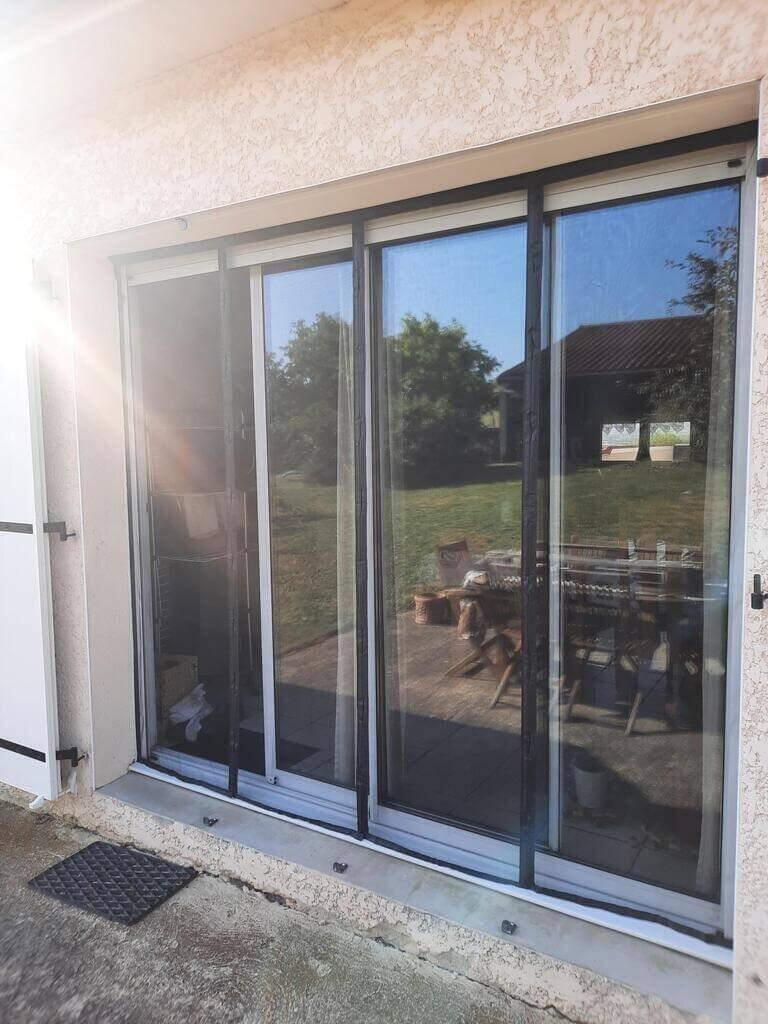
We ordered the large custom screen for our three-panel sliding doors. Measuring was straightforward, it arrived on time, and the install took about 20 minutes with no dramas. The magnets line up and snap shut every time, even with the kids and the dog going in and out. It looks tidy and is barely noticeable, keeps the airflow, and the mozzies have been kept outside since day one. The mesh and stitching feel solid. Stoked with the result. Great value for money.
Models for doors, windows and large sizes.


mosquitoes once installed

comfort and relief

strength and durability

installation with no tools required

money back guarantee

harmful chemicals